Magento 2 Cache Warmer loads the shop page first so visitors always experience fast page loading.
Magento caches page data to improve loading speed. However, when the cache is cleared, the first visitor must wait for the page to be regenerated. These delays can impact user experience and conversion rates.
Magento 2 Cache Warmer solves this problem by automatically loading store pages in the background. Pages are cached before customers visit them, so the store always loads quickly.
Extensions use message queue-based asynchronous processing to warm up the page without affecting live showcase performance.
- Automatically warm up the cache for shop pages
- Preload homepage, categories, products, CMS and custom URLs
- Add URLs directly from the URL Rewrite grid
- Message queue-based background processing
- Admin dashboard to track heating progress
- CLI commands for managing URL collections
- Start or restart the heating process manually
Customers will get a zip folder then they have to extract the contents of the zip folder on their system.
The extracted folder has a src folder, inside the src folder you have an application folder. You need to transfer this application folder to the Magento 2 root directory on the server, as shown below.
After successful installation, you have to run this command in the Magento 2 root directory:
php bin/magento setup:upgrade
php bin/magento setup:di:compile
php bin/magento setup:static-content:deploy
php bin/magento indexer:reindex
php bin/magento cache:flush
php bin/magento queue:consumers:start url.cache.warmer &
For multilingual support, admin will navigate through Store->Configuration->General ->Locale Options and select locale as German
(the language the admin wants to translate the shop content into).
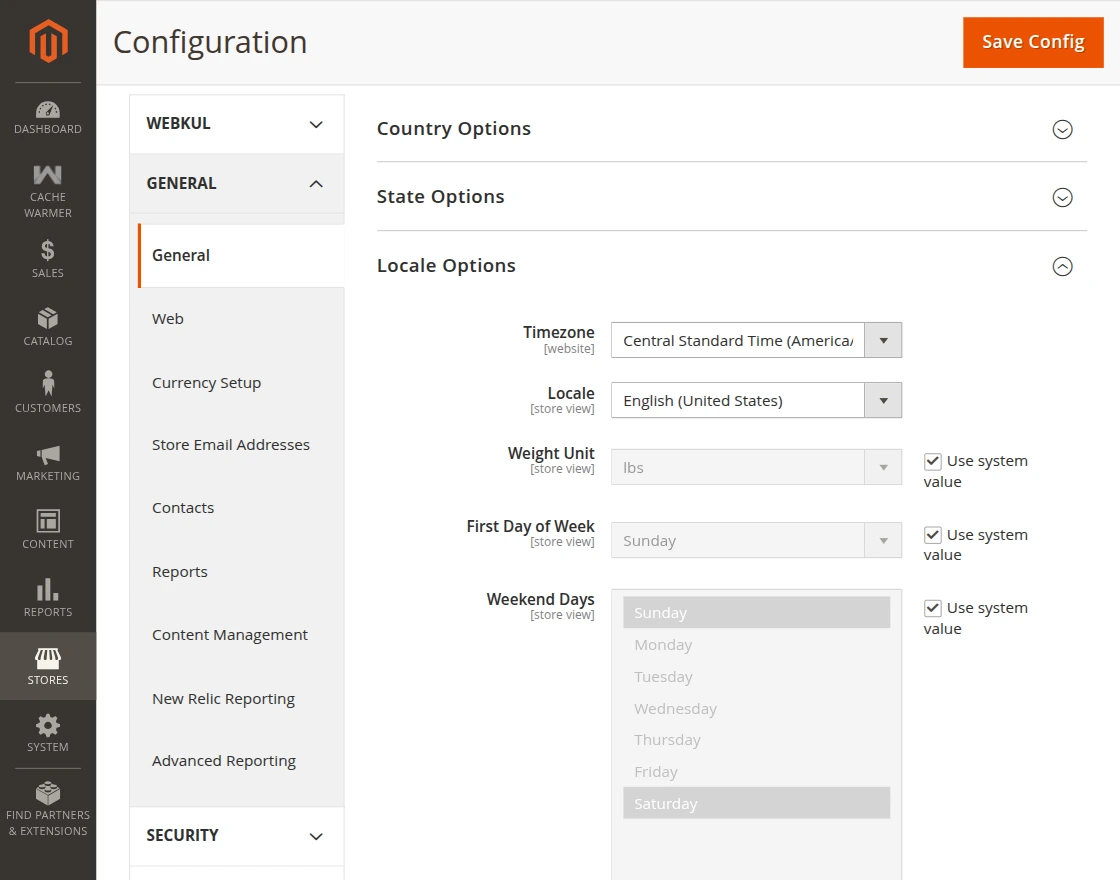
For Magento 2 Cache Warmer translation, navigate to the following path on your system src/app/code/Webkul/CacheWarmer/i18n.
Open the file named en_US.CSV for editing as shown in the image below.
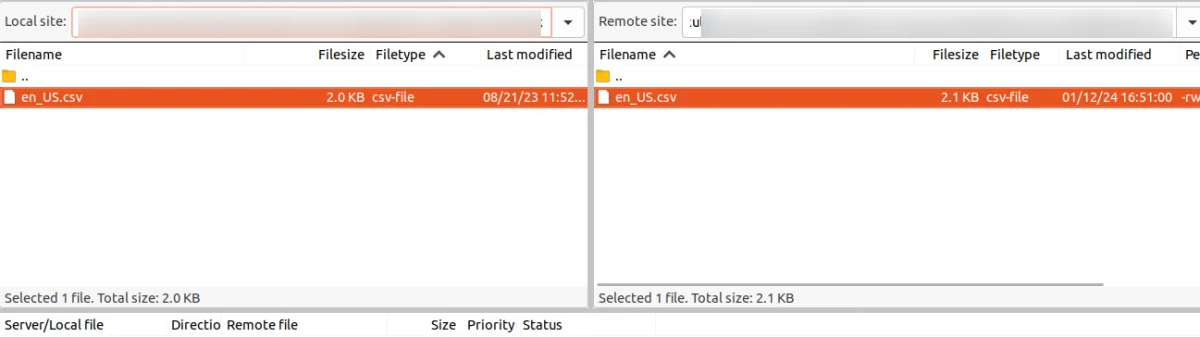
Now, upload it to the path src/app/code/Webkul/CacheWarmer/i18n where the Magento 2 installation is on the server. The module is translated into the desired language.
Users can edit the CSV as shown below.
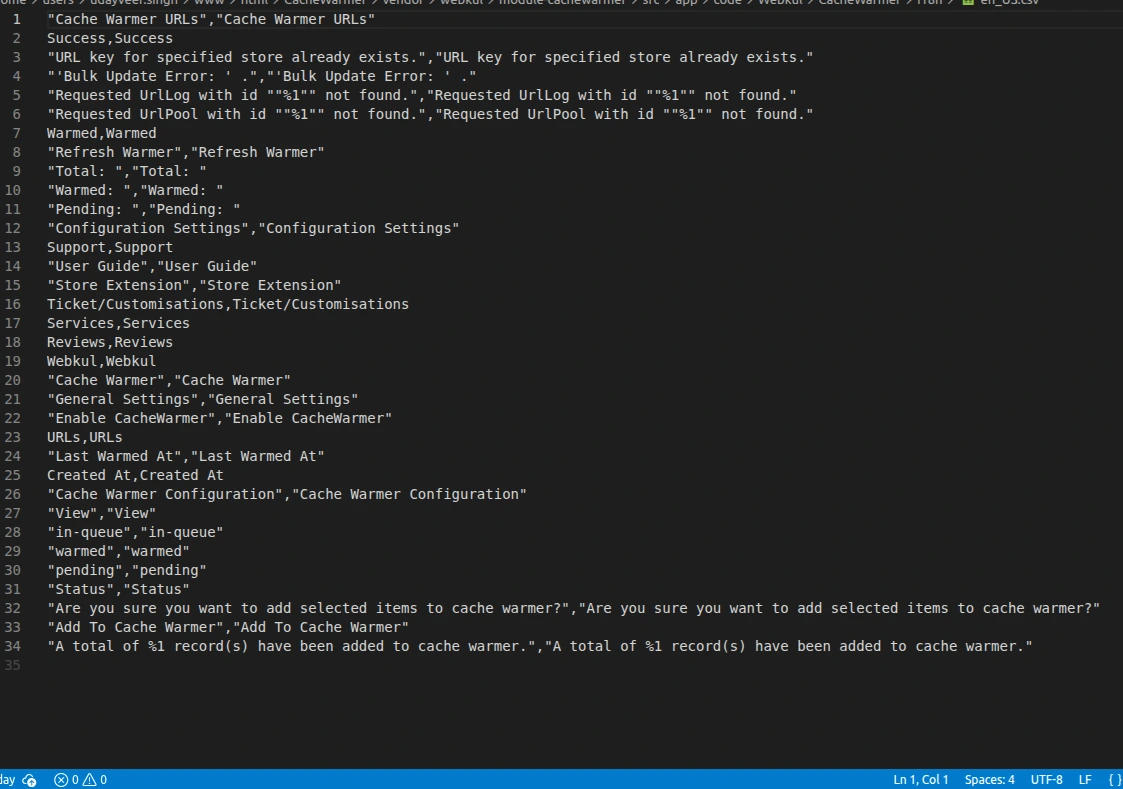
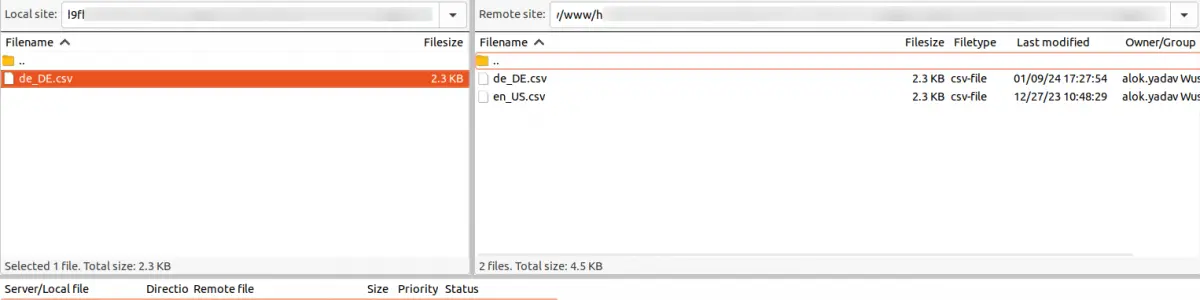
After editing and translating the CSV file, you need to save the name of the translated file according to your region, language and country code, such as – de_DE.CSV.
Followed by uploading the translation file to the same folder where you got it. Now your module translation is complete.
To configure the extension, navigate to: Save → Configuration → Cache Warmer
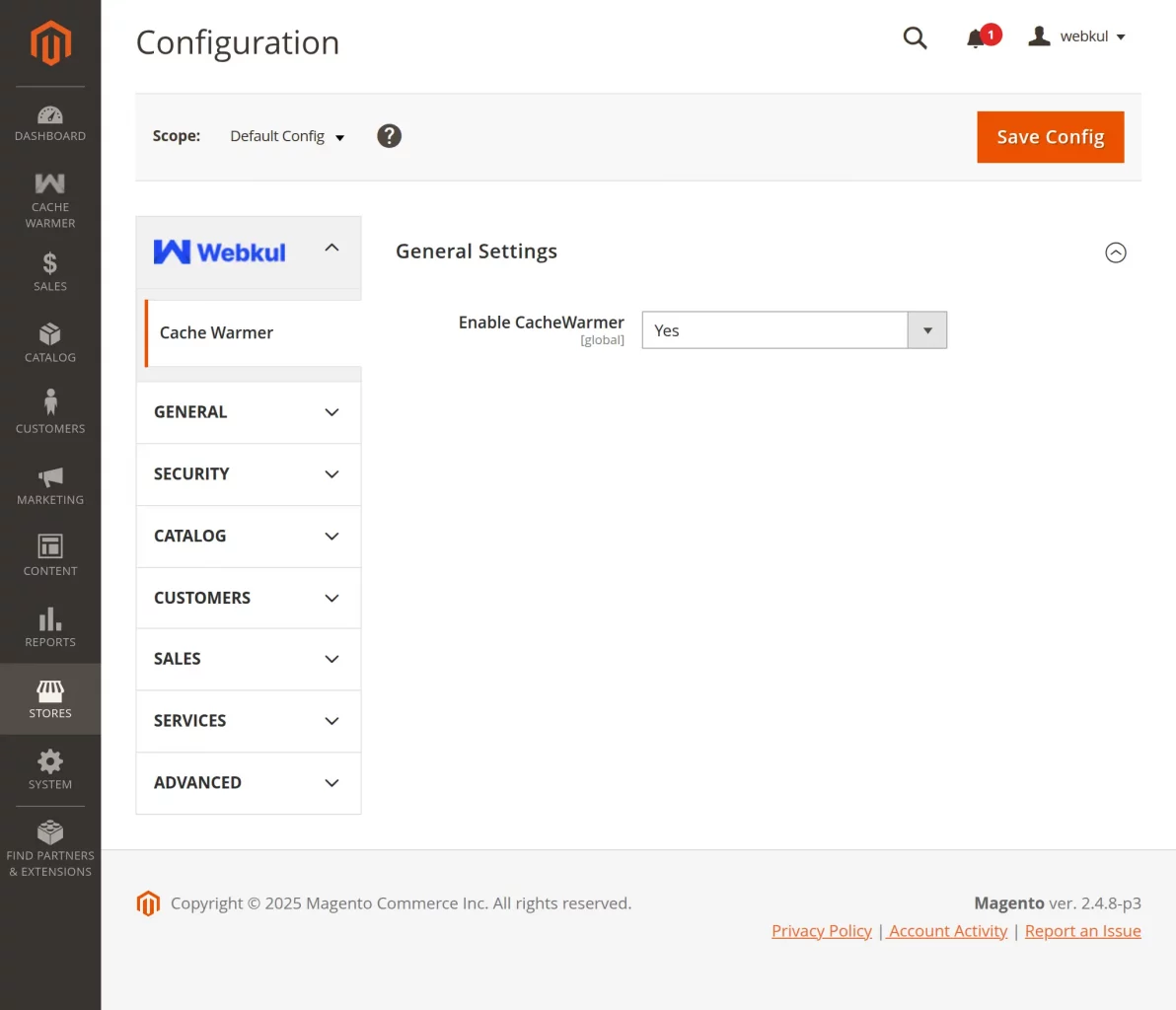
From here, admins can activate the module
Admin can monitor and manage the cache warming process from the backend panel.
The system provides clear status indicators for all URLs.
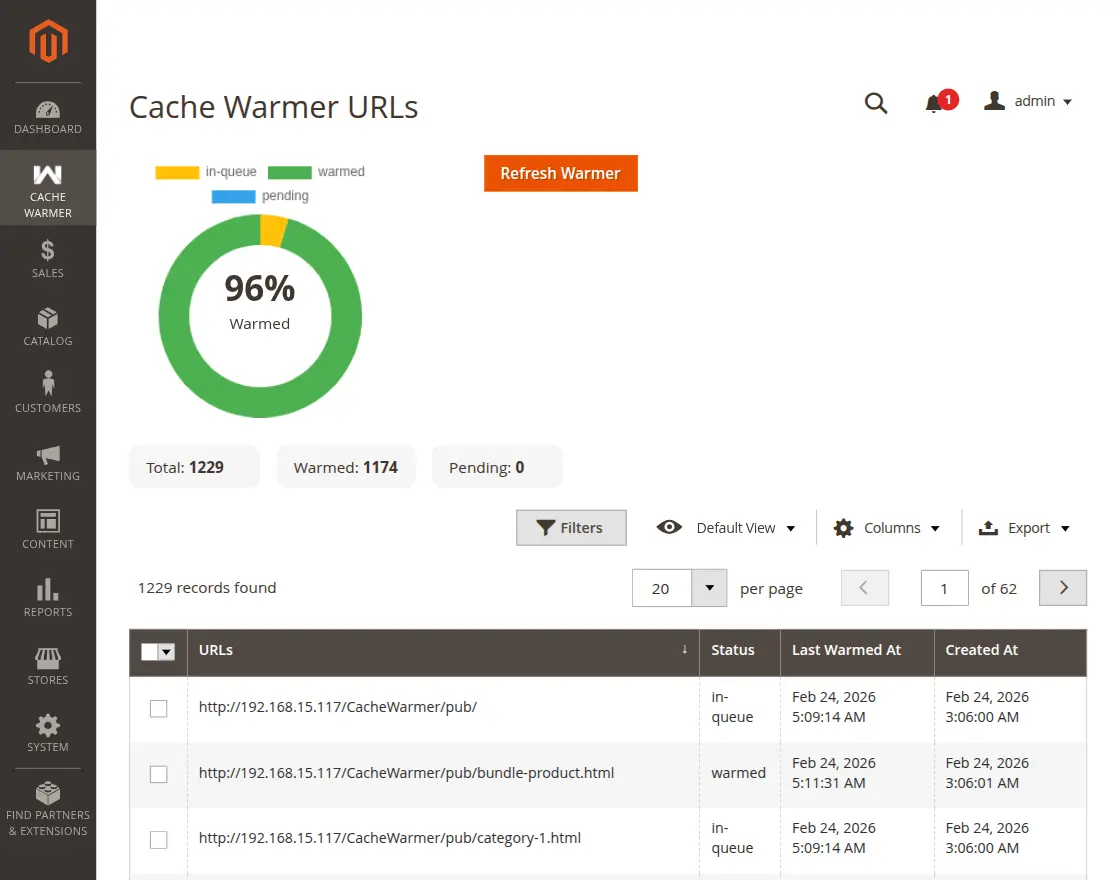
Refresh/Restart Warmer: Refresh Warmer button allows the admin to manually restart the cache warming process.
Admin can see the following status:
This helps keep track of which pages have been cached
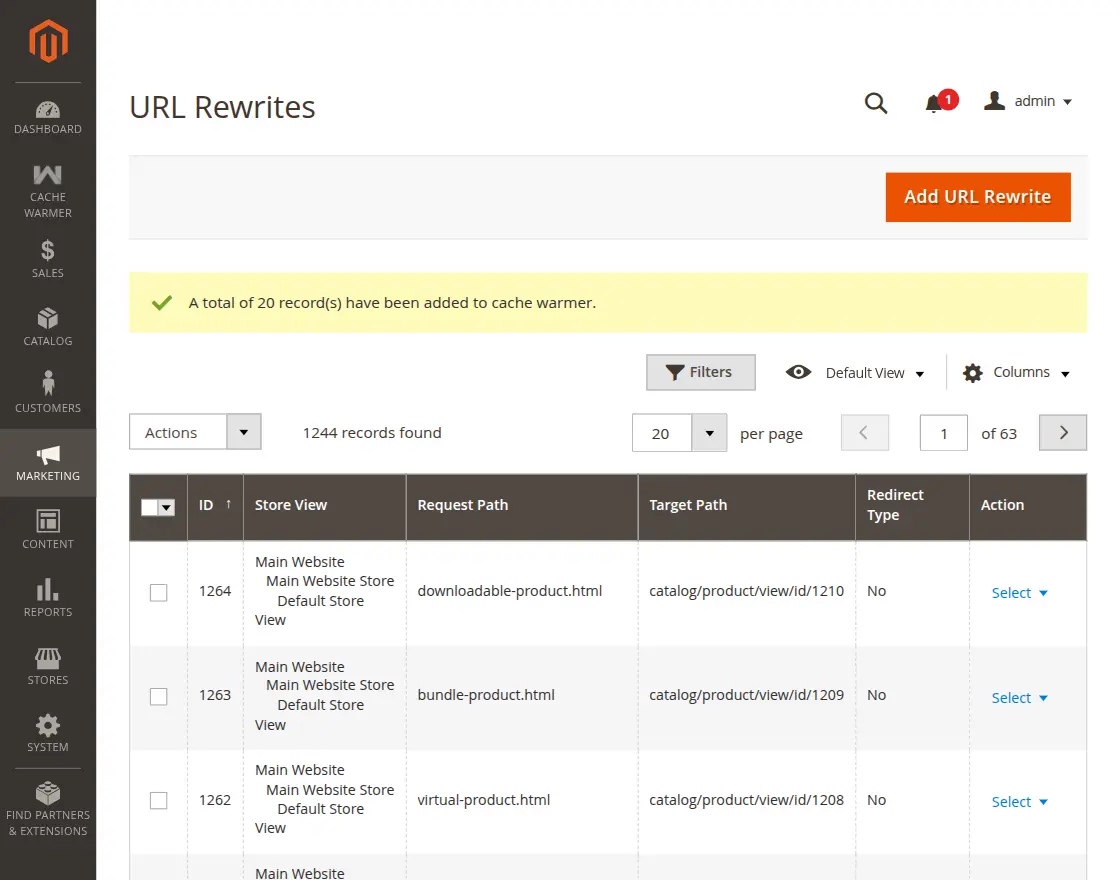
Admins can easily add URLs to warmup pools from URL rewriting grid.
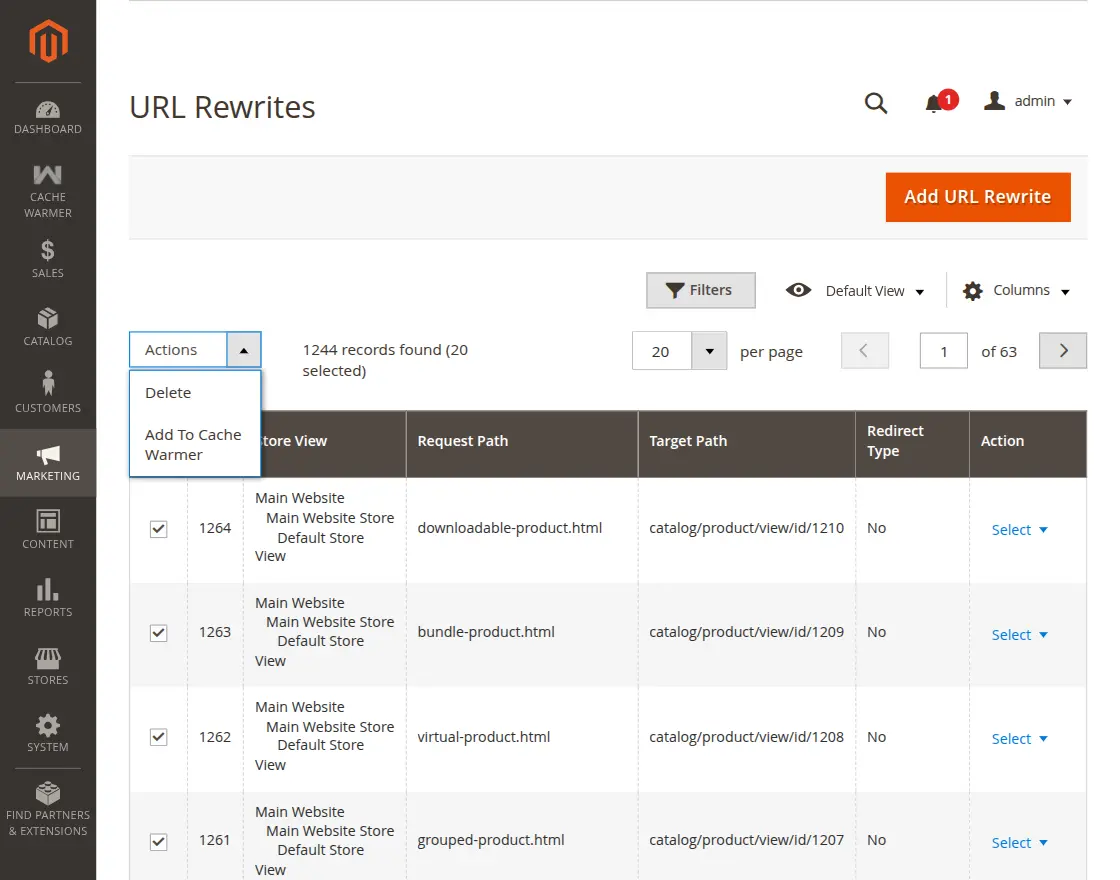
Admins can select one or more URLs using admin bulk actions.
Supported URL types include:
This ensures important store pages are cached quickly.
CLI Commands for URL Collection Management
php bin/magento cachewarmer:truncate:urlpool
php bin/magento cachewarmer:generate:urlpool
That’s it for Magento 2 Cache Warmer. However, if you are still having issues, please add a ticket and let us know your views to make this module better webkul.uvdesk.com
Current Product Version – 4.0.0
Supported Framework Versions – Magento 2.0.x, 2.1.x, 2.2.x,2.3.x, 2.4.x

PakarPBN
A Private Blog Network (PBN) is a collection of websites that are controlled by a single individual or organization and used primarily to build backlinks to a “money site” in order to influence its ranking in search engines such as Google. The core idea behind a PBN is based on the importance of backlinks in Google’s ranking algorithm. Since Google views backlinks as signals of authority and trust, some website owners attempt to artificially create these signals through a controlled network of sites.
In a typical PBN setup, the owner acquires expired or aged domains that already have existing authority, backlinks, and history. These domains are rebuilt with new content and hosted separately, often using different IP addresses, hosting providers, themes, and ownership details to make them appear unrelated. Within the content published on these sites, links are strategically placed that point to the main website the owner wants to rank higher. By doing this, the owner attempts to pass link equity (also known as “link juice”) from the PBN sites to the target website.
The purpose of a PBN is to give the impression that the target website is naturally earning links from multiple independent sources. If done effectively, this can temporarily improve keyword rankings, increase organic visibility, and drive more traffic from search results.