Direct Refund From Paypal is an Odoo module that helps users process PayPal Refunds directly from the system. This eliminates manual steps and increases accuracy in refund operations.
With this module, users can manage Refund Tracking, Transaction records and Invoice related refunds in one place. This ensures a clear and structured Direct Refund process.
This module follows a proper Credit Note workflow, so that every PayPal Refund is aligned with accounting standards. It also ensures transparency using Refund Reasons and tracking details.
Prerequisites for using Odoo Direct Refund From Paypal
Odoo Direct Refund From Paypal works in conjunction with the following modules:
Odoo Website Paypal Express Checkout Payment Acquirer
You need to install the above-mentioned module to use Odoo Direct Refund From Paypal.
- Create a Credit Note to initiate a structured and compliant refund workflow
- Supports full and partial Transaction refunds with controlled amount validation
- Require a mandatory Refund Reason before confirming any PayPal Refund action.
- Maintain complete Refund Tracking for all refund records and activities
- Automatically link each refund to the associated Invoice and Transaction
- Note the refund details including amount, date and Reason for Refund.
- Enable quick navigation between Invoice, Transaction and refund entries
- Increase financial accuracy with a precise Credit Note-based refund process
- Ensure a secure and reliable Direct Refund workflow for all transactions
- Once you purchase the App from Webkul store, you will receive a link to download zip module submit.
- Extract the files on your system once the download is complete. As a result, you will see a folder named- ‘paypal_refund_payments’.
- Copy and paste this folder inside your folder Odoo Add-ons Path.
- Now, open the Odoo Application and click on the Settings menu. Here, click Enable Developer Mode.
- Then, open the Application menu and click ‘Update Module List.’
- In the search bar, clear all filters and search for ‘paypal_refund_payment’.
- You will be able to see the module in the search results. Click on ‘Activate‘ to install it.
1. Confirm Sales Orders Using the Paypal Express Checkout payment method
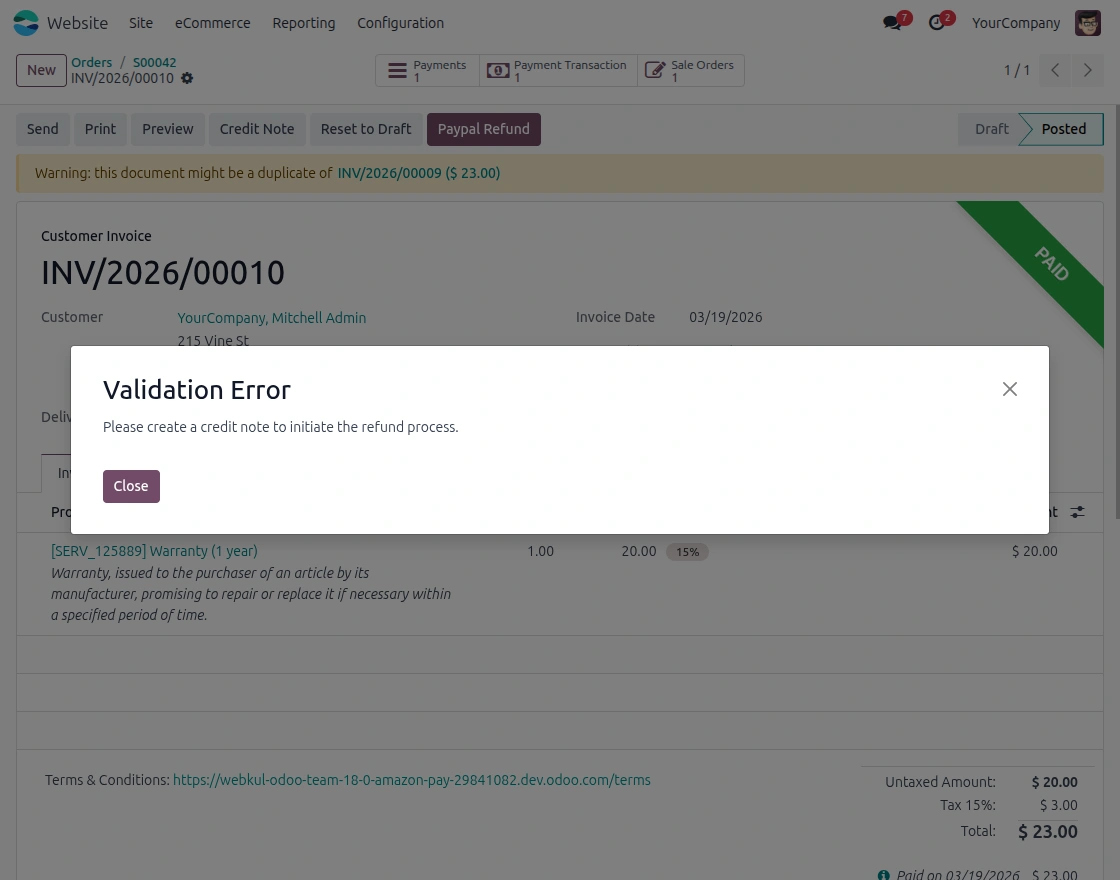
2. First Create a Credit Note, then go to Paypal Refund. A Validation Error occurs when you directly try to select the Paypal Refund Button.
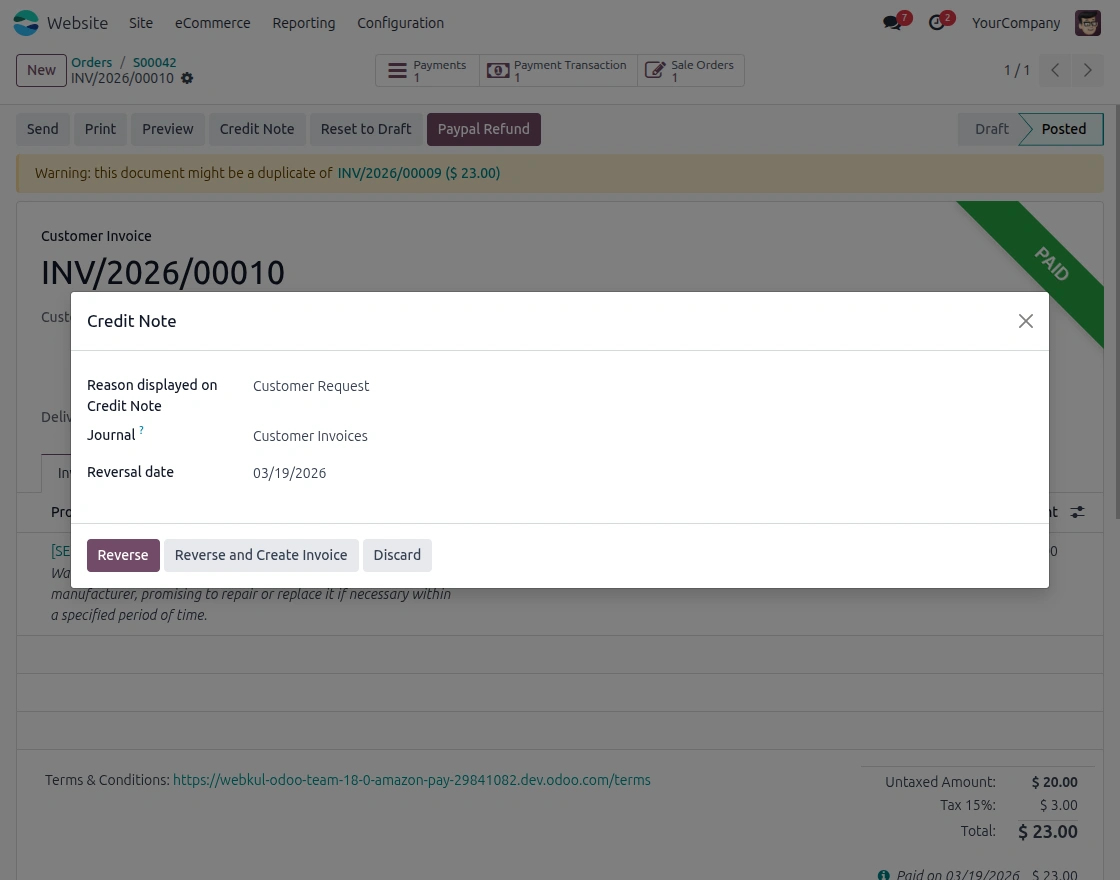
3. When creating a credit note, select the reason for refund and other columns, select as needed.
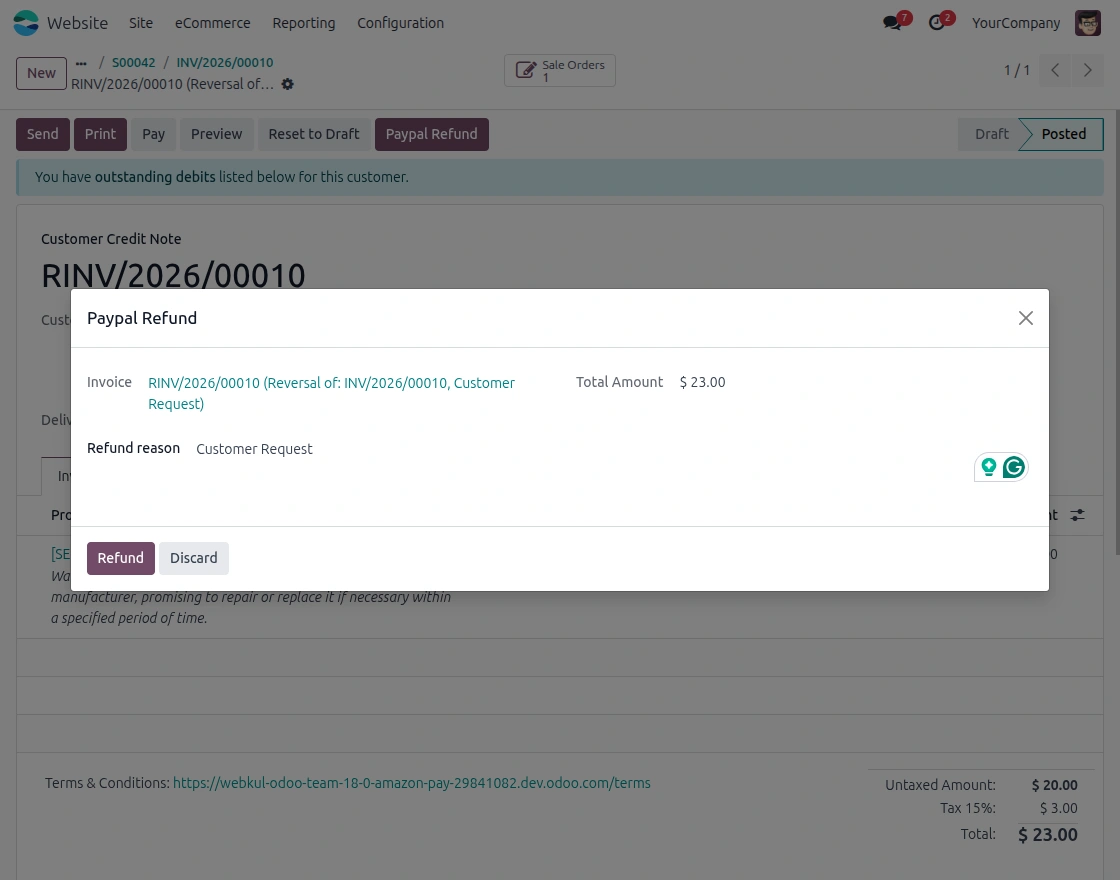
4. In Payal Refund, Refund reason must be selected to Proceed. Also check the Refund amount for refund.
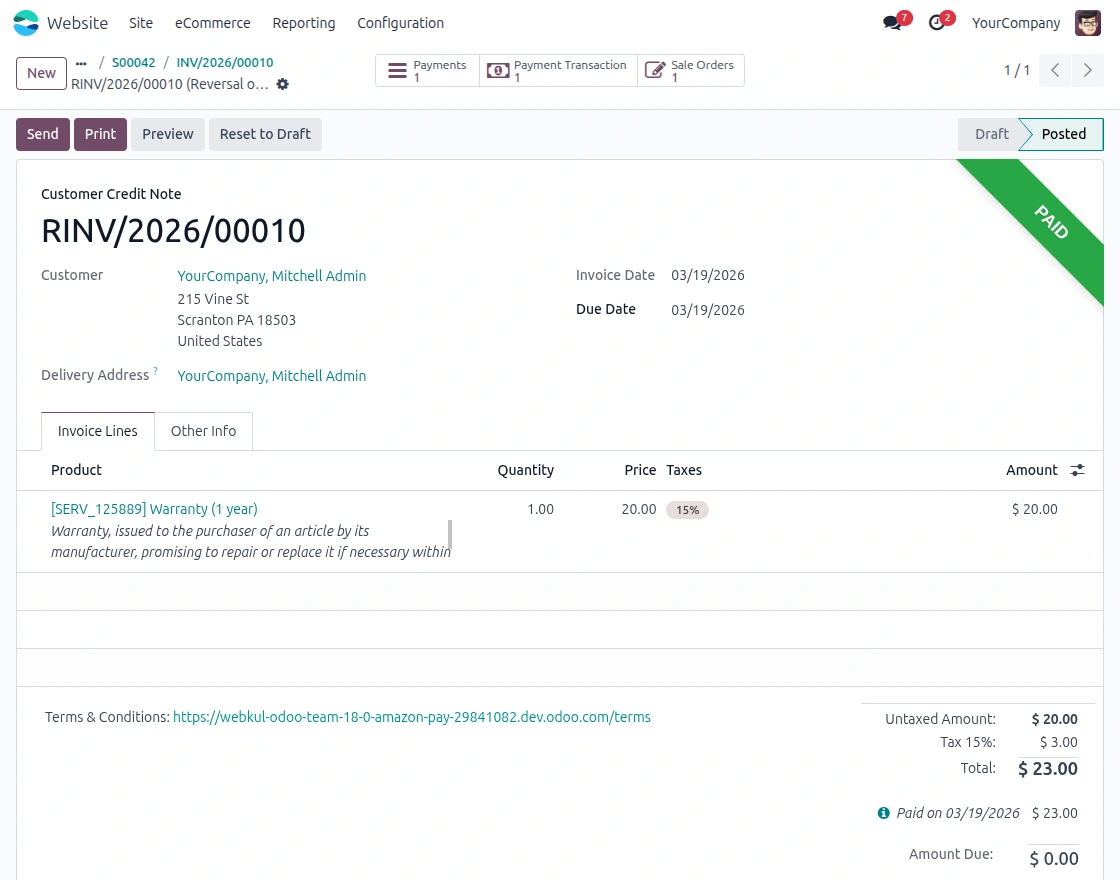
5. This screen displays the credit note created during the refund process, where the user can review and validate the refund details. Choose Payment Transactions for linked PayPal transactions.
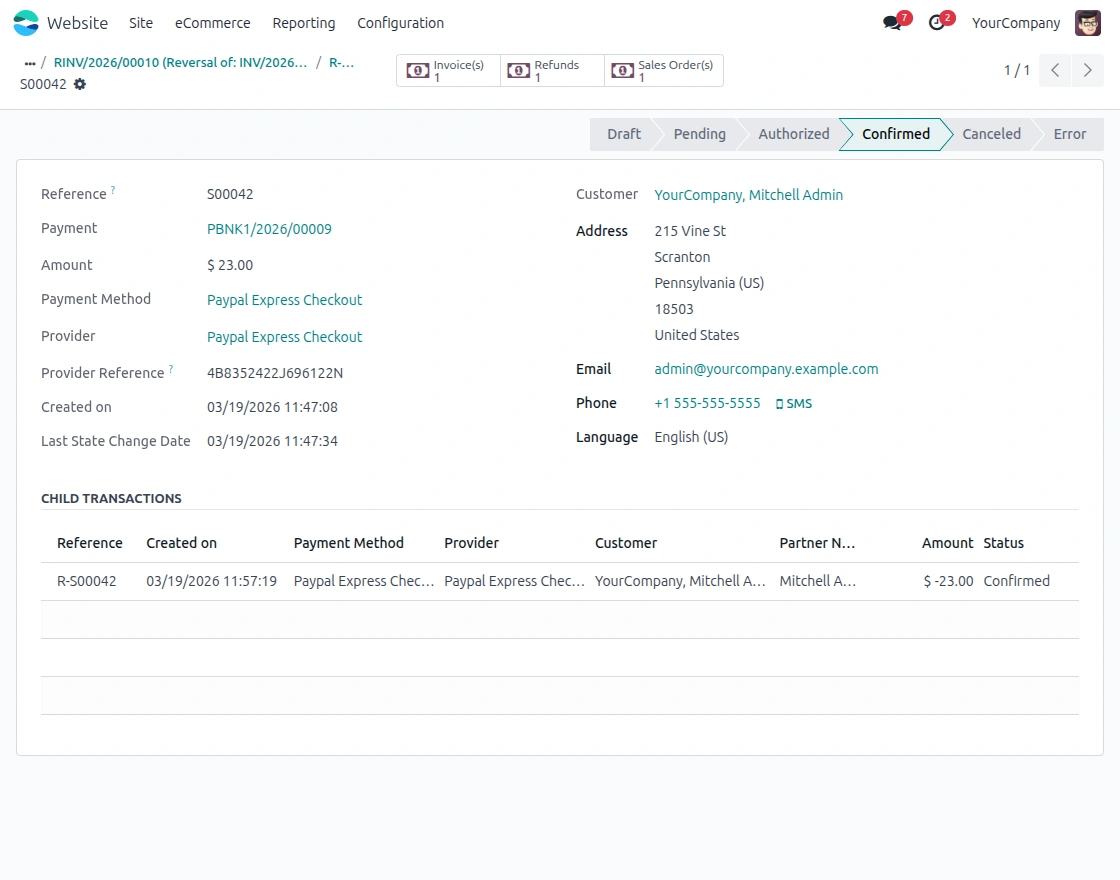
6. Click Transaction Source from Fields to view Child transactions. Child transactions show other important details
We hope this guide is useful for you! Please share your feedback in the comments below.
If you still have problems/questions, please create a ticket at UV Desk.
I hope this helps. If you have further questions, contact us on our support mail.
Thank you for noticing!!
Current Product Version – 1.0.0
Supported Framework Versions – Odoo Version 19, 18, 17

PakarPBN
A Private Blog Network (PBN) is a collection of websites that are controlled by a single individual or organization and used primarily to build backlinks to a “money site” in order to influence its ranking in search engines such as Google. The core idea behind a PBN is based on the importance of backlinks in Google’s ranking algorithm. Since Google views backlinks as signals of authority and trust, some website owners attempt to artificially create these signals through a controlled network of sites.
In a typical PBN setup, the owner acquires expired or aged domains that already have existing authority, backlinks, and history. These domains are rebuilt with new content and hosted separately, often using different IP addresses, hosting providers, themes, and ownership details to make them appear unrelated. Within the content published on these sites, links are strategically placed that point to the main website the owner wants to rank higher. By doing this, the owner attempts to pass link equity (also known as “link juice”) from the PBN sites to the target website.
The purpose of a PBN is to give the impression that the target website is naturally earning links from multiple independent sources. If done effectively, this can temporarily improve keyword rankings, increase organic visibility, and drive more traffic from search results.