Shiprocket Shipping for WooCommerce Marketplace helps connect Shiprocket shipping services with your WooCommerce Multi-Vendor marketplace.
This enables smooth and efficient delivery operations.
This module allows admins and vendors to manage shipping efficiently, ensuring a smooth shipping experience for customers.
Automatically syncs marketplace orders with the Shiprocket dashboard, making order handling faster and easier for individual sellers.
Customers see courier options based on their address and vendor location, ensuring accurate shipping options.
This plugin displays live shipping rates at checkout, helping customers choose the best option.
The system also supports multi-vendor scenarios by dividing orders by seller.
- Seamlessly integrate Shiprocket shipping with WooCommerce multi-vendor marketplace.
- Allows admins to configure Shiprocket API credentials globally for the entire marketplace.
- Supports multiple courier partners for flexible and optimal delivery.
- Automatically pick up and display courier options based on pickup and delivery locations.
- Display real-time shipping rates at checkout for accurate pricing.
- Enables vendor-wise shipping calculations based on individual pickup locations.
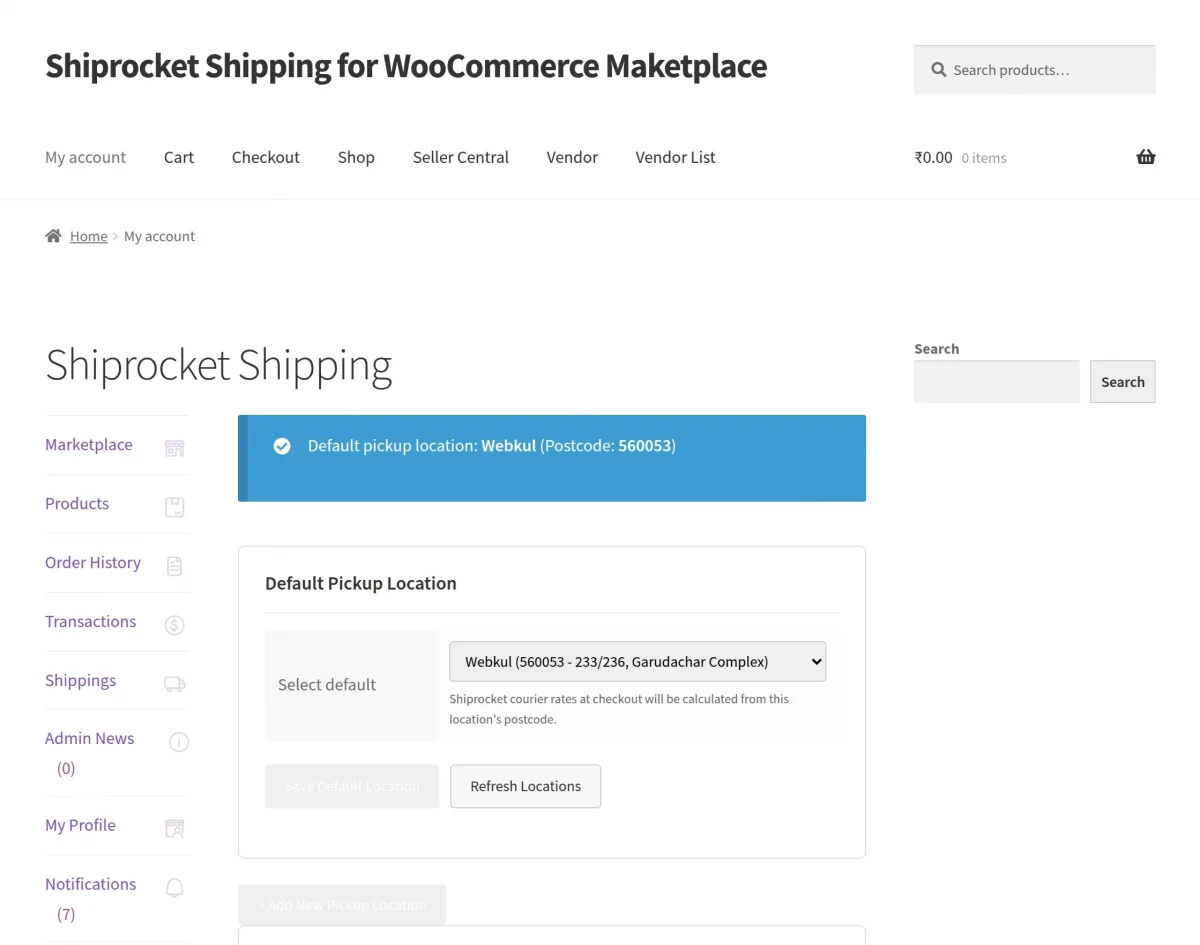
- Admins can set a default pickup location for replacement scenarios.
- Vendors can configure their own pickup/warehouse locations for accurate logistics.
- Sync and manage all Shiprocket pickup locations with one click.
- Allows determining global product dimensions (length, width, height) and weight.
- Automatically sync WooCommerce marketplace orders with Shiprocket dashboard.
- Split orders by vendor to process shipments separately for each seller.
- Generate AWB numbers automatically for each shipment.
- This system allows admins and vendors to create shipping labels directly from the order page.
- Allows printing shipping invoices directly from WooCommerce.
- Displays admin, vendor and customer assigned courier partner details.
- Provides real-time delivery tracking for all vendor orders.
The user will get a zip file, which he has to upload to “Add New Plugin” menu options in the WordPress admin panel.
For this, log in to the WordPress Admin Panel.
From the Dashboard, hover over the “Plugins” menu to open the submenu, then click the “Add New Plugin” option.
After that, you will see the option at the top of your page labeled “Upload Plugin.” Click option to upload zip files.
After that, click on “Upload Plugin” choice. You will see a button “Select File”. Click on the button to browse the zip file as per the snippet below.
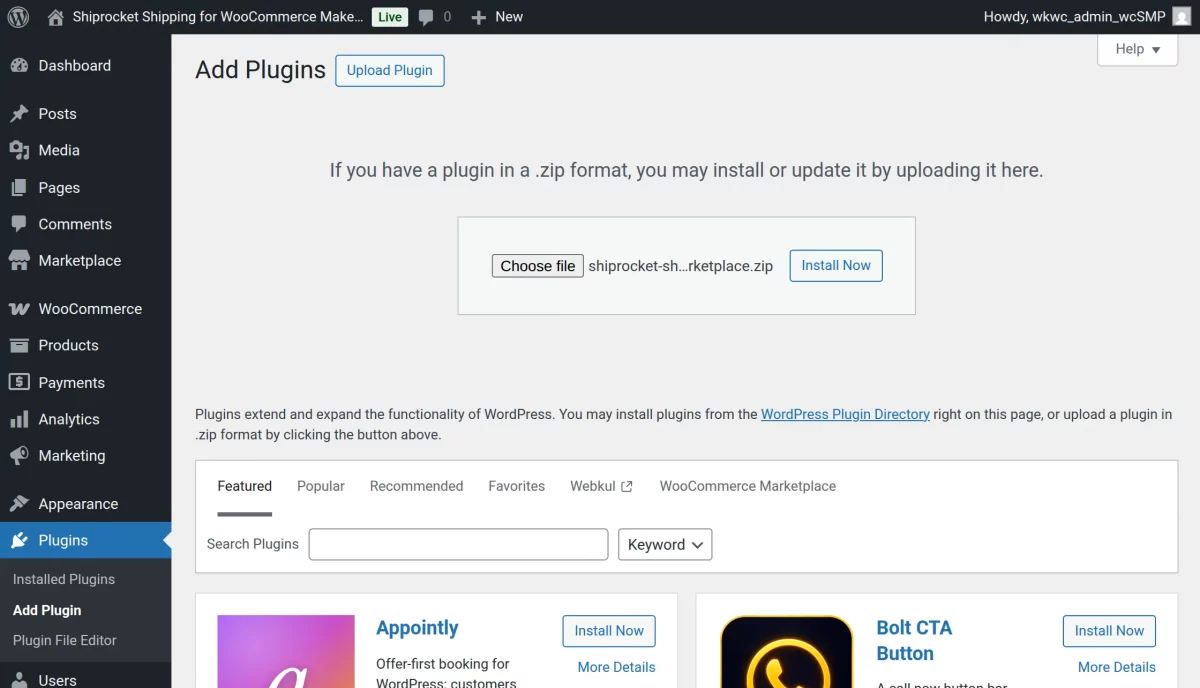
Therefore, now to browse the files, click on it “Install Now” button to install the plugin.
When the plugin is installed correctly, the system will display a success message and an option to activate it.
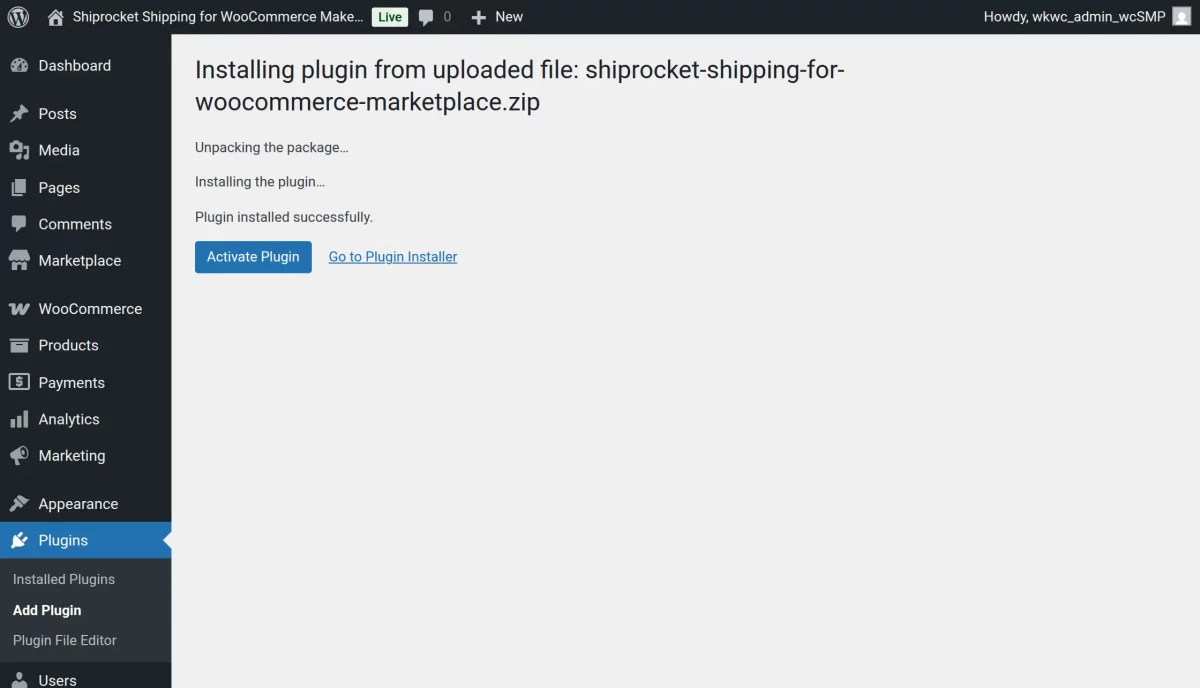
After that, click “Activate Plugin” to activate the installed plugin.
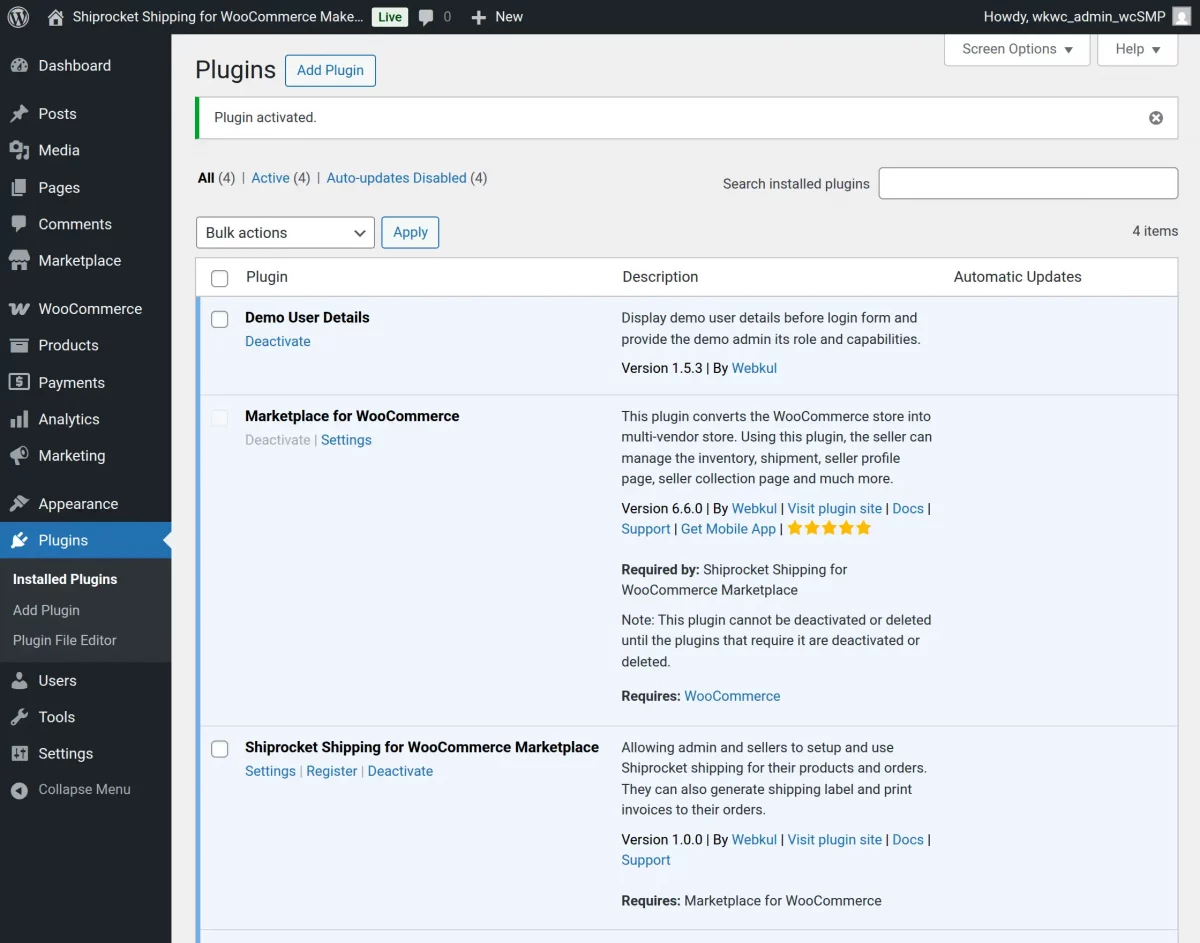
This completes the installation of the Shiprocket Shipping for WooCommerce Marketplace plugin.
Module Activation and Update
Check how to activate your WooCommerce plugin via purchase code.
Also check how you get updates on Webkul modules directly on the Plugins page.
Module Translation
To find out how to translate the module, you can click here.
On the Shiprocket side, you first need to configure Shiprocket shipping details, such as API user & password, and add a pickup address.
You will get all these details once you successfully create a Shiprocket account.
To create a Shiprocket account, navigate to the Shiprocket login page and click ‘Register Now‘ option is located at the bottom.

To get started, register on the Shiprocket registration page by selecting the “I am a Seller” option and completing the required details, as shown below.

Once you complete registration and create your Shiprocket account, the system redirects you to the Shiprocket dashboard.

Create an API User in Shiprocket
To create an API user in Shiprocket, go to Settings > Additional Settings > API Users.

Click ‘+Add New API User‘, enter your email ID and password, then click ‘Create User‘ to complete the process.

Once you successfully enter these details, the system will display the newly created API user in the Shiprocket API user list.

NOTES- A Shiprocket API configuration token will be generated automatically after this configuration is saved.
Manage Pickup Address on Shiprocket
To manage pickup address locations in Shiprocket, go to Settings > Pickup Address

This section will display a complete list of pickup addresses currently added in Shiprocket by users, along with the option to add new pickup locations.

You can add multiple pickup addresses in Shiprocket, using tags like Home, Work, Warehouse, or others to organize them as needed.
To add a new pickup address in Shiprocket, click ‘+Add Pickup Address‘ button located in the top right corner.

After entering the address and contact details, click ‘Verify and Save Address‘ knob.
The system will then ask you to verify the OTP sent to your registered phone number.

Once you successfully enter the address details, the system saves the pickup location in Shiprocket.

After installing the module, admins can access settings to manage the Shiprocket Shipping for WooCommerce Marketplace add-on.
API Settings
To configure the plugin, the admin must enter the Shiprocket API Email and Password in the plugin settings. The system automatically generates tokens.
1. Navigate to Webkul WC Addons -> Shiprocket Marketplace -> Settings.
2. Enter your Shiprocket API Email and API Password.
3. The system automatically retrieves the API token. You can also refresh it manually using the ‘Click here to Refresh Token’ option.
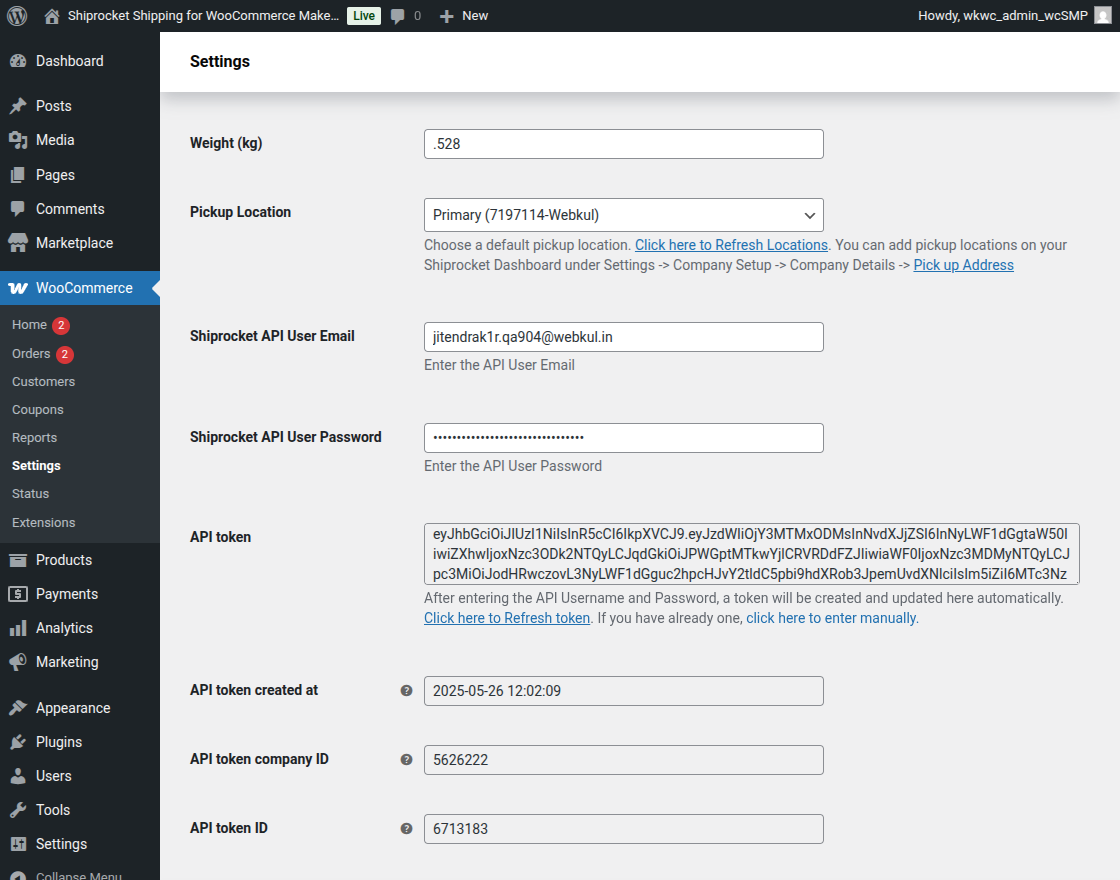
Shipping Arrangements
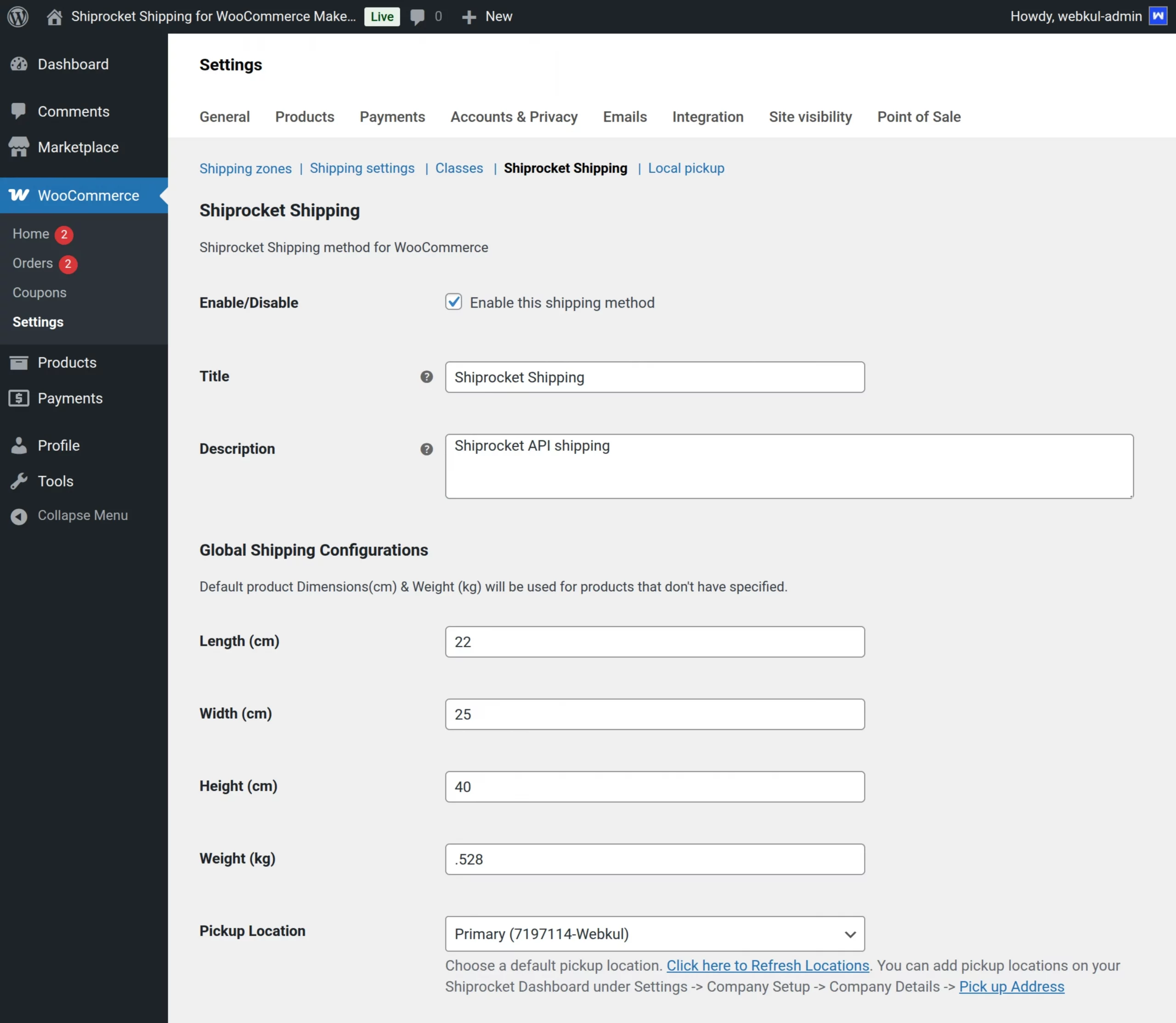
Admins can enable or disable Shiprocket shipping methods and configure global settings.
Enable/Disable: Switch Shiprocket shipping method for markets.
Global Dimensions: Sets the default Length, Width, Height, and Weight if not specified for each product.
Pickup Location
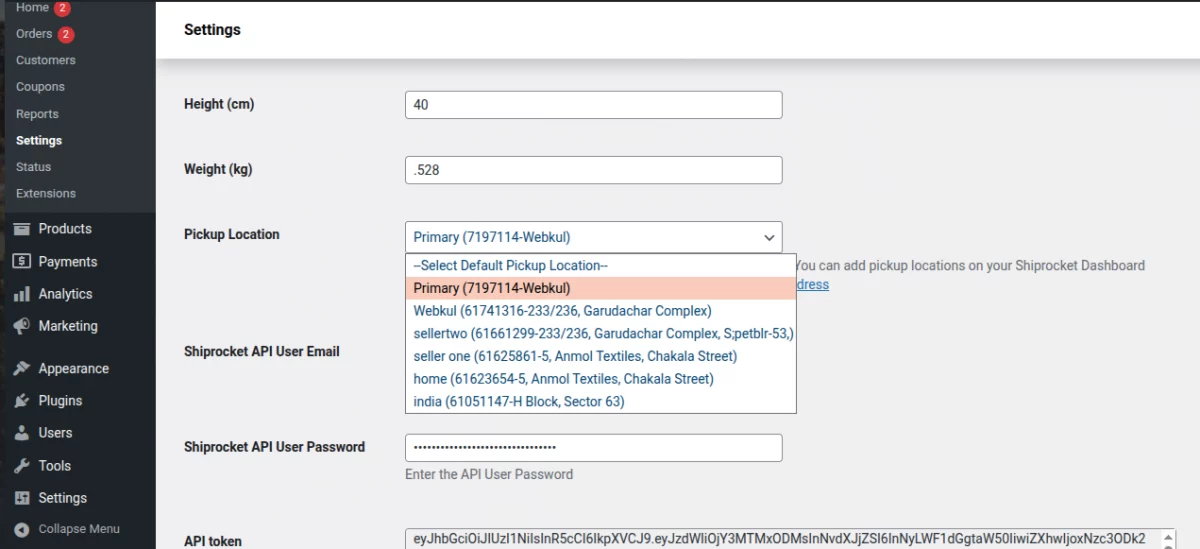
Admins can set primary pickup locations and sync Shiprocket locations using the “Refresh Locations” option.
Delivery Management Admin
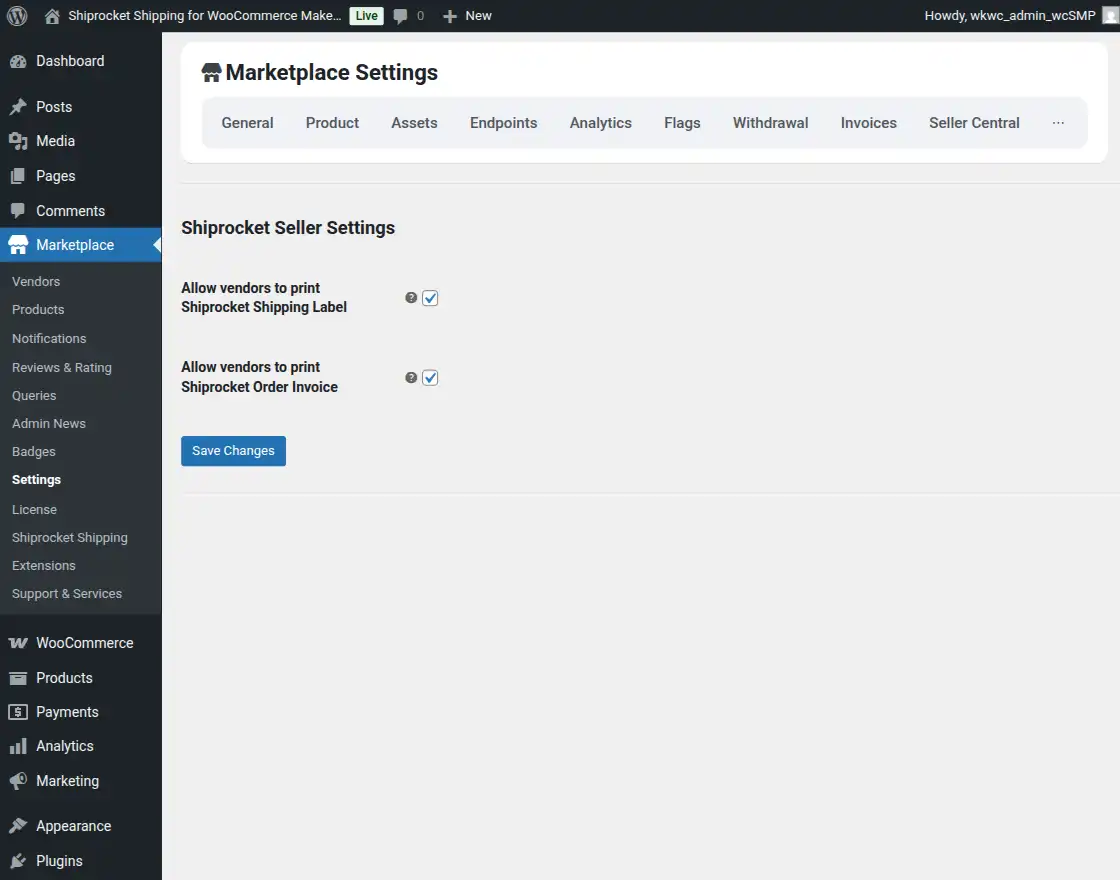
Admins manage marketplace shipping, configure Shiprocket settings, and control vendor permissions.
With Shiprocket integration, marketplace sellers can manage their own shipping processes independently.
Vendors can configure pickup locations, create shipments, print labels & invoices, and track orders—all from their dashboard.
Vendor Configuration
If allowed by the admin, vendors can open their dashboard settings to configure Shiprocket.
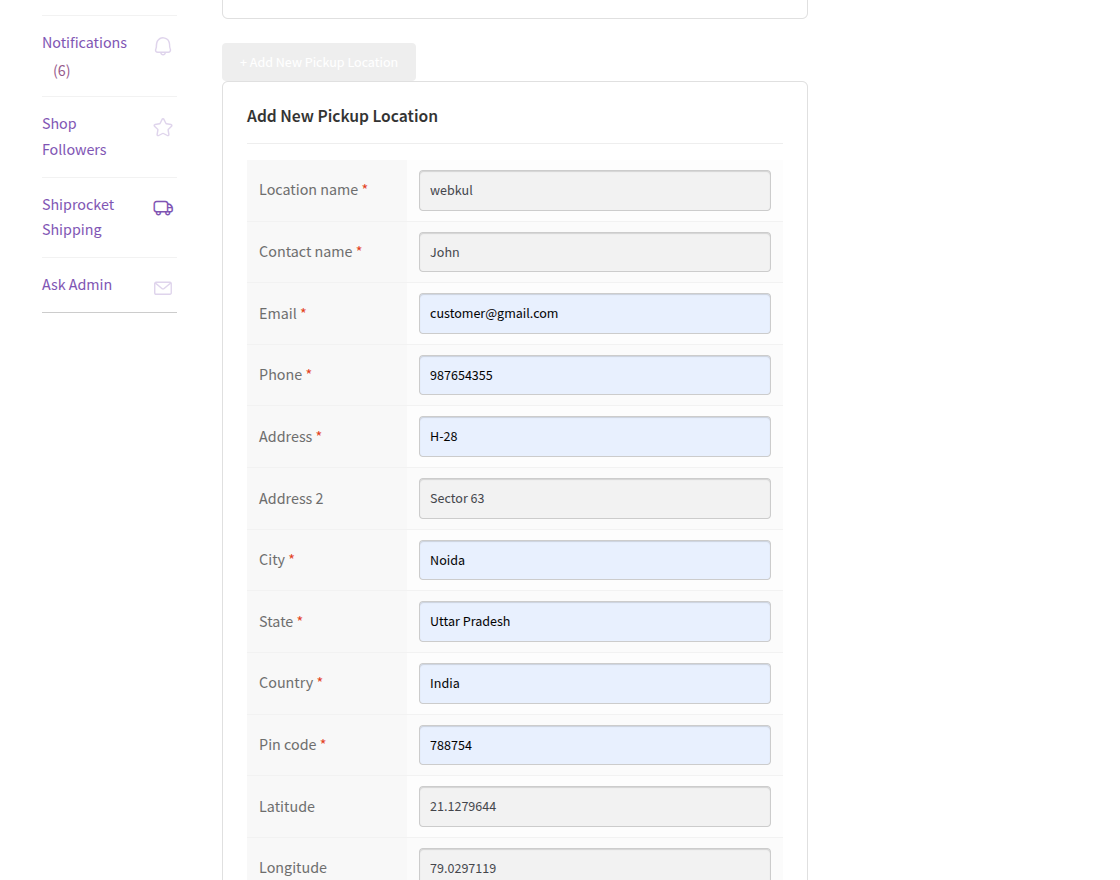
Steps to Add a Pickup Location
- Go to Shiprocket Delivery part
- Fill in the required details:
- Location Name
- Contact Name
- Email & Phone
- Address (Line 1 & 2)
- City, State, Country
- Pin Code
- GSTIN, Latitude, Longitude
- Click Save Pickup Location
4. The system synchronizes the location with Shiprocket and stores it in the market.
Shiprocket Shipping Labels & Invoice Printing
Managing shipping documents is critical to order fulfillment.
With Shiprocket Shipping for WooCommerce Marketplace, admins and sellers can create labels and invoices right from the dashboard—ensuring faster, error-free processing.
Shipping Label Printing
Shipping labels are critical for courier partners to accurately identify, scan and deliver packages.
How It Works
Step 1: Place Order
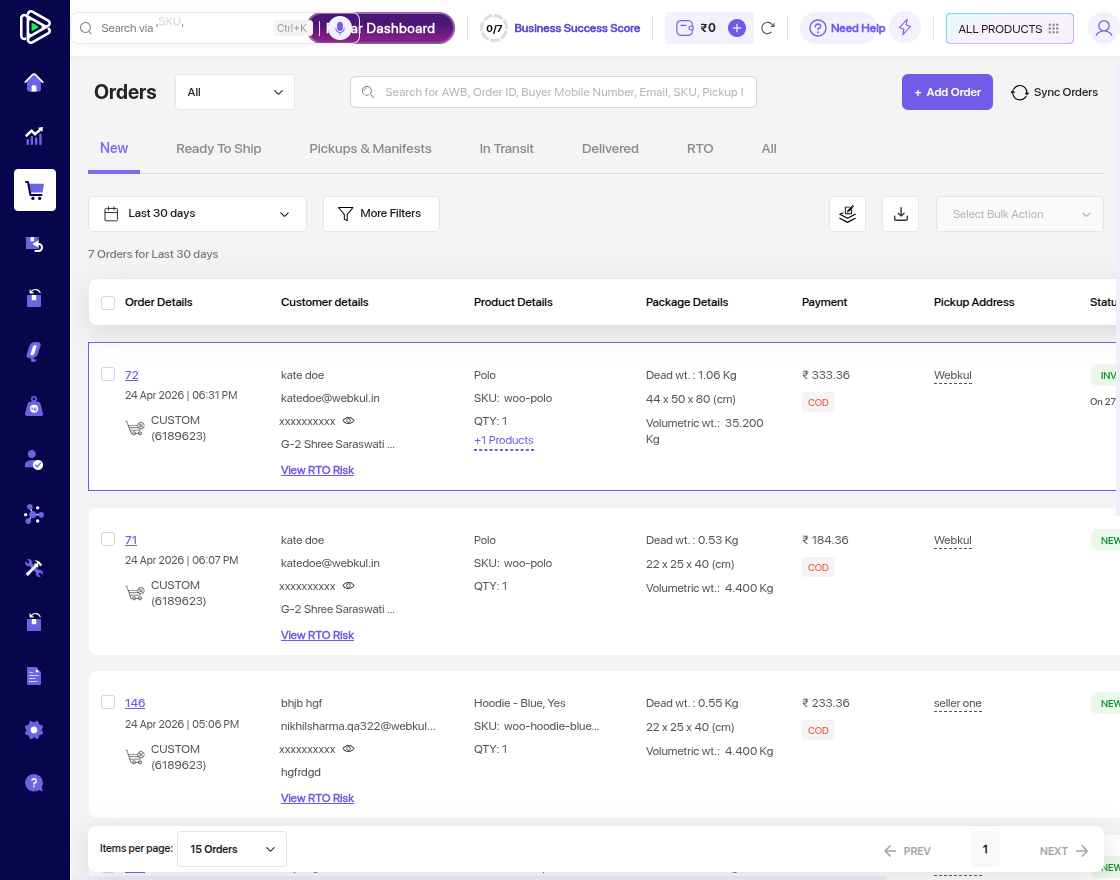
- Customers place orders on the WooCommerce marketplace
- The system automatically synchronizes orders with Shiprocket.
- It then creates a shipment and generates an AWB number.
Step 2: Navigate to Orders
Admin:
- Go to WooCommerce → Orders → Edit Orders
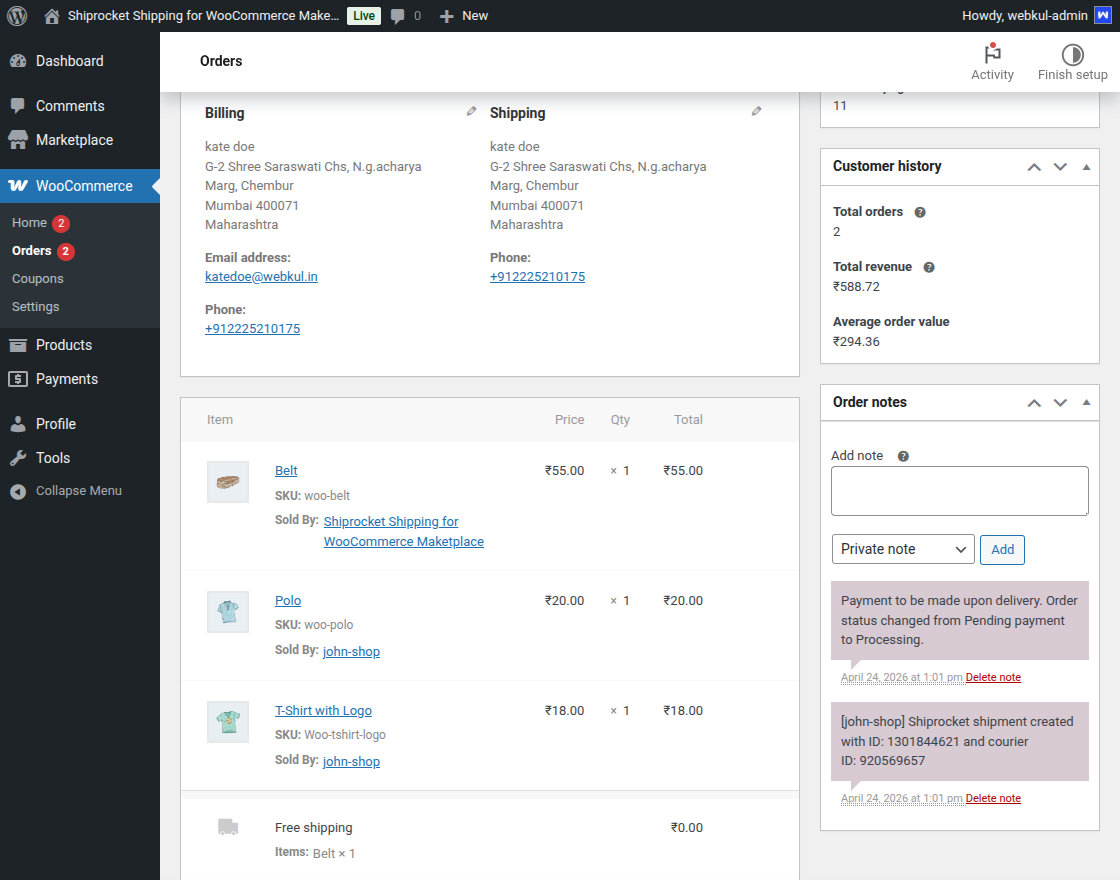
Seller:
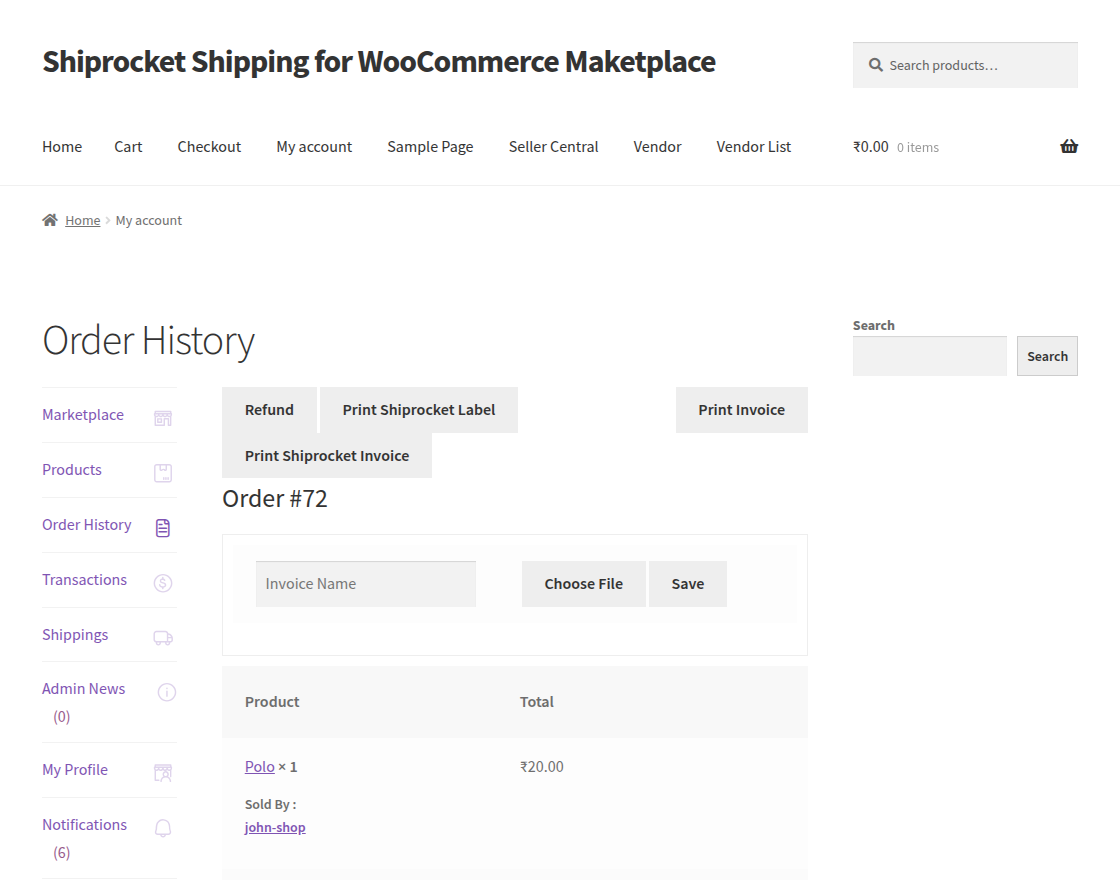
- Go to My Account → Orders → View Orders
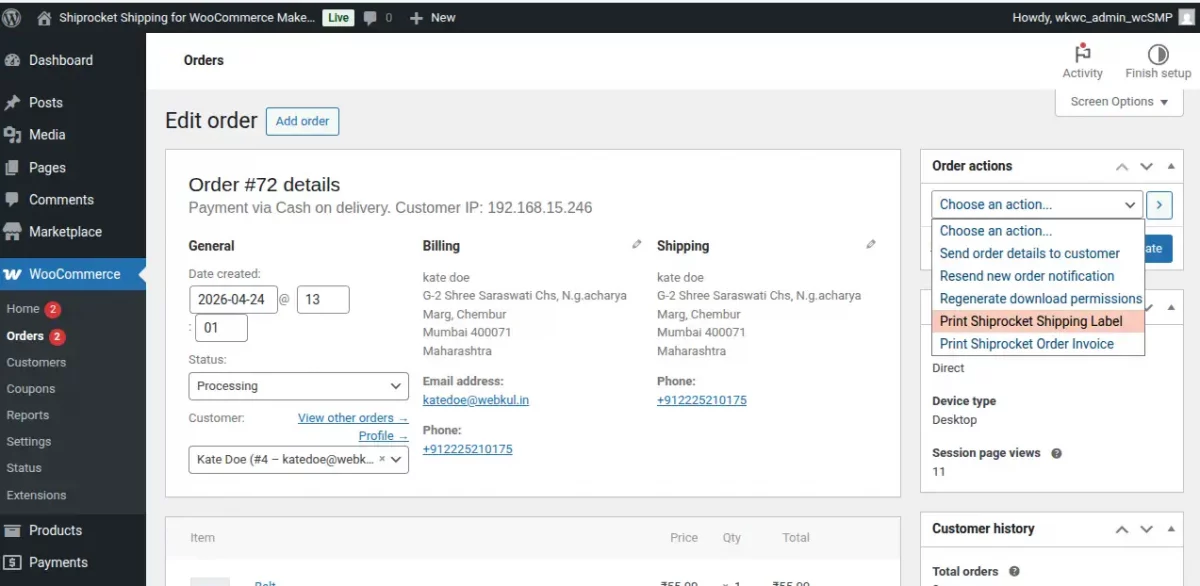
Step 3: Generate a Shipping Label
- Admin chooses “Print Shiprocket Shipping Labels” of the order action
- Click seller “Print Ship Labels” knob
Step 4: Print Shipping Labels
- Vendors just click “Print Ship Labels” knob
- The system sends a request to Shiprocket
- The system generates PDF labels instantly.
- The label opens in a new tab and is ready to print
When placing an order, customers fill in the delivery address and contact details necessary to process and ship the order.

Based on customer address, plugin automatically displays a list of available Shiprocket courier partners for that location.
This plugin retrieves and displays real-time shipping rates from each Shiprocket courier partner on the cart page and checkout page.
The system updates shipping rates for different couriers at checkout based on COD and non-COD payment methods.
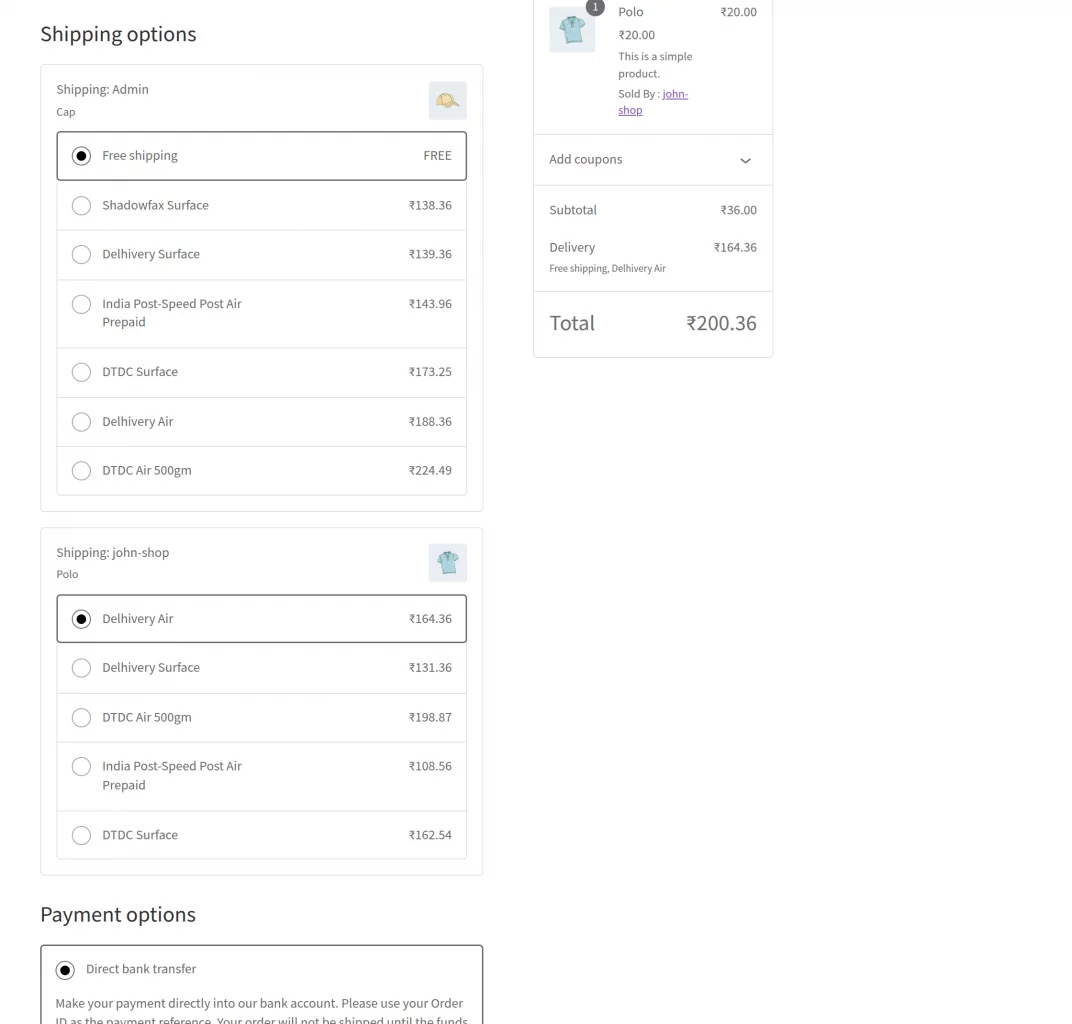
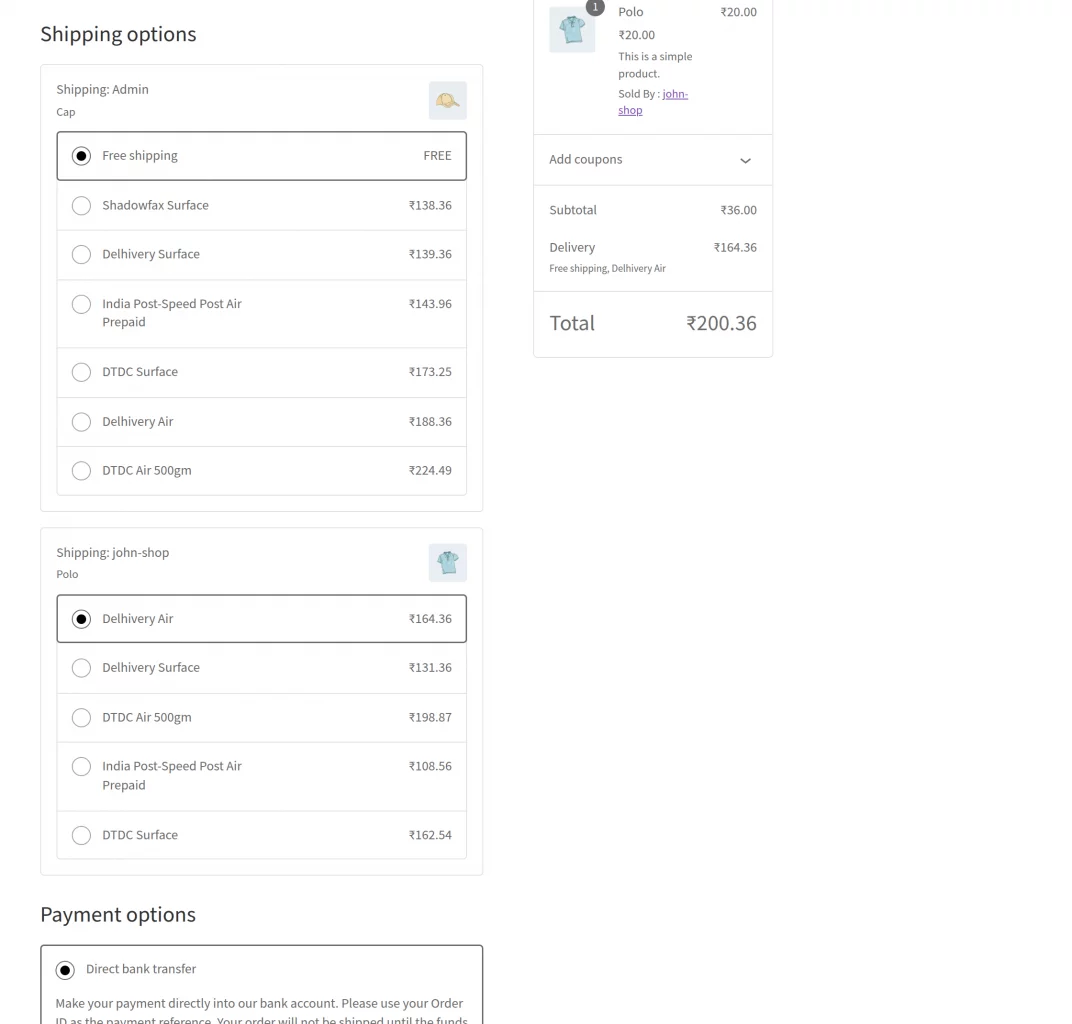
For example, when a customer enters a shipping address, say location-1, the plugin will display courier partners and rates based on that location.
When an address moves to another location, the system automatically updates the courier list and rates based on the new address, as shown below:
They receive standard WooCommerce order confirmations and any configured shipping updates via email or the store’s notification system.
When a customer places an order, the system automatically divides it by vendor and creates the appropriate shipment in Shiprocket.
Admins can view delivery details such as courier partners, AWB numbers, and tracking status of all marketplace orders.
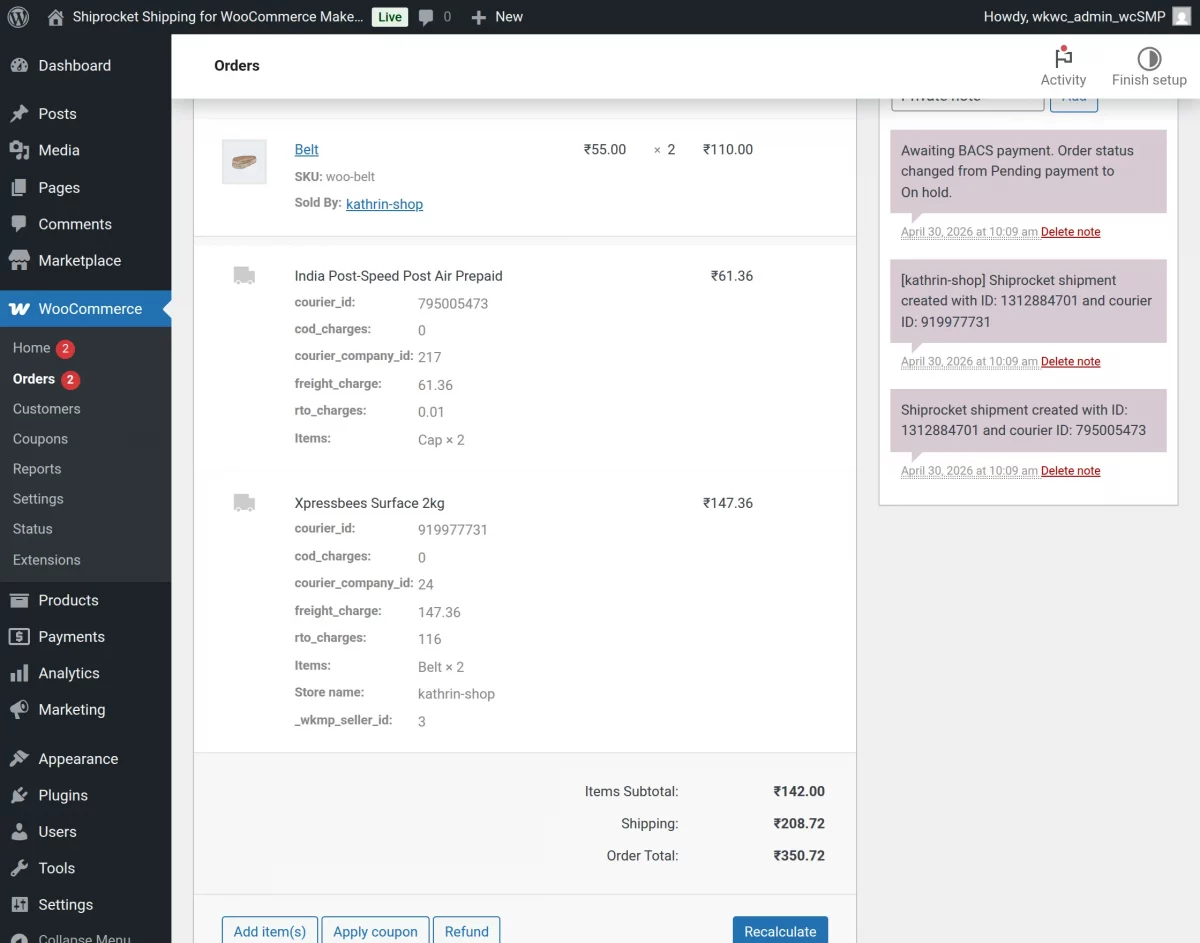
For admin-owned products, shipping is handled directly using the admin’s Shiprocket account.
Shipping labels and invoices can also be generated from the order page if required.
Check out Shiprocket Courier Partners | Customer
Customers can too view assigned Shiprocket courier partners by checking the order details in their WooCommerce account.
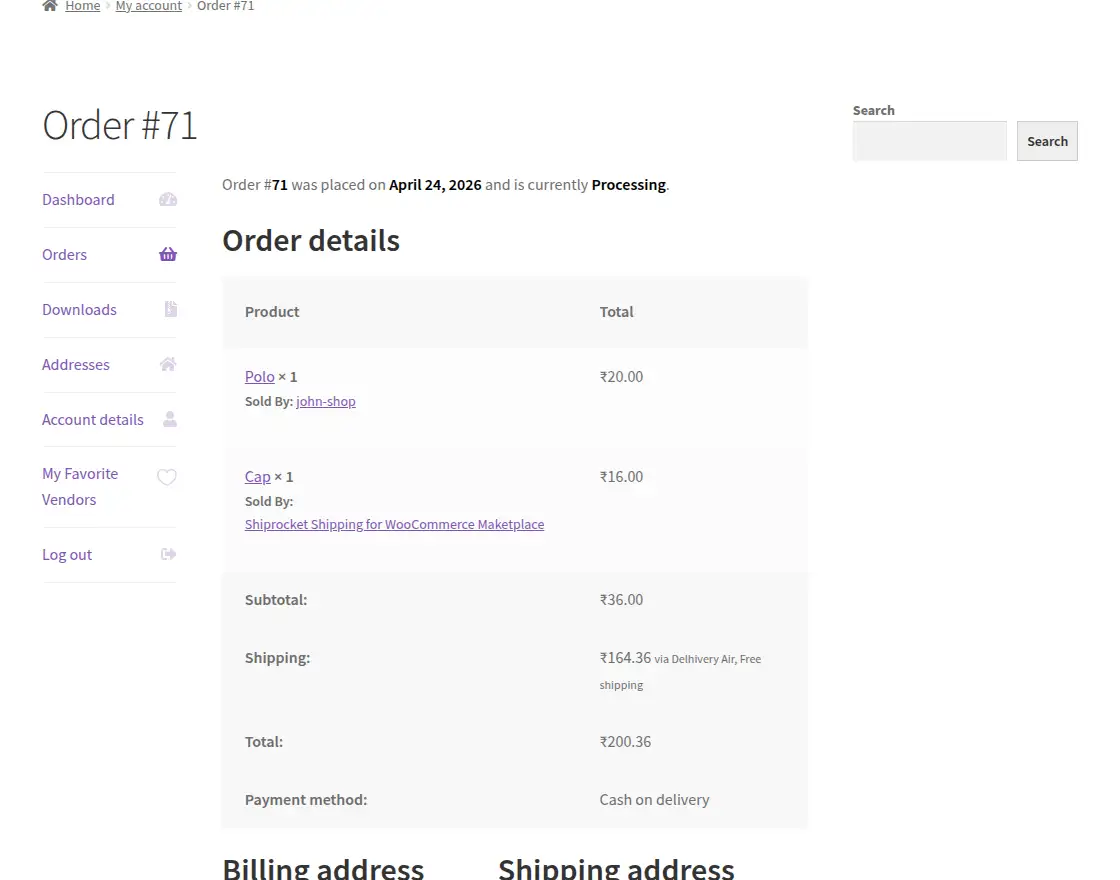
Additionally, Shiprocket automatically syncs WooCommerce orders with its dashboard for efficient shipping management.

This eliminates manual data entry and ensures timely order processing through the Shiprocket platform.
So, that’s it for Shiprocket Shipping for WooCommerce Marketplace plugins.
However, if there are any issues, please add a ticket and let us know your views at webkul.uvdesk.com.
—
**Notes**: This module is compatible with WooCommerce’s latest High Performance Order Storage (HPOS) and new Cart and Checkout blocks.
However, if there are any problems, feel free to add a ticket and let us know what you think at [webkul.uvdesk.com](
Current Product Version – 1.0.0
Supported Framework Versions – WordPress: 6.9 Woo-commerce: 10.7.4 WooCommerce Multi Vendor Marketplace:6.6.0

PakarPBN
A Private Blog Network (PBN) is a collection of websites that are controlled by a single individual or organization and used primarily to build backlinks to a “money site” in order to influence its ranking in search engines such as Google. The core idea behind a PBN is based on the importance of backlinks in Google’s ranking algorithm. Since Google views backlinks as signals of authority and trust, some website owners attempt to artificially create these signals through a controlled network of sites.
In a typical PBN setup, the owner acquires expired or aged domains that already have existing authority, backlinks, and history. These domains are rebuilt with new content and hosted separately, often using different IP addresses, hosting providers, themes, and ownership details to make them appear unrelated. Within the content published on these sites, links are strategically placed that point to the main website the owner wants to rank higher. By doing this, the owner attempts to pass link equity (also known as “link juice”) from the PBN sites to the target website.
The purpose of a PBN is to give the impression that the target website is naturally earning links from multiple independent sources. If done effectively, this can temporarily improve keyword rankings, increase organic visibility, and drive more traffic from search results.
